
DUOMO FLORENCE HISTORY
The story of the Duomo
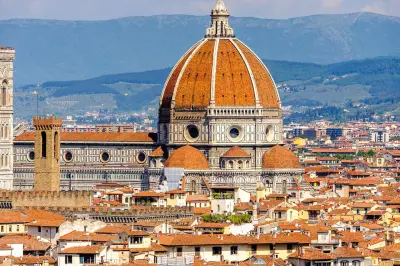
The Duomo Florence, also known as Santa Maria del Fiore, is one of Italy’s most iconic churches. Its stunning dome, completed in the 15th century, was the largest in Western Europe at the time.
The Duomo complex is made of several buildings: The Santa Maria del Fiore Cathedral, which was built between 1296 and 1436; the Baptistery of San Giovanni, which dates back to the 11th century; Giotto’s Campanile, a Bell Tower built between 1334 and 1359; and the Museo dell’Opera del Duomo, established in 1891. The Cathedral complex is a UNESCO World Heritage Site, showing Florence’s significant contribution to art and architecture during the Renaissance.

Built on the site of Santa Reparata
Santa Maria del Fiore is located on the site where Florence’s first cathedral, Saint Reparata, was built between the 4th and 6th centuries. The basilica was one of the city’s earliest Christian buildings. By the 9th century, it became the main basilica dedicated to Saint Reparata, a martyr who became the city’s patron in 400 AD. During the new Duomo’s construction, Santa Reparata continued to hold masses. Over time, it became a burial site for important figures, including Filippo Brunelleschi. The archeological remains of the ancient basilica and its mosaic floor with Christian decorations can still be seen in the basement of the Cathedral.

The birth of the new Cathedral
The plans for construction of the new Cathedral began in the late 13th century because the existing Santa Reparata had deteriorated and was becoming too small for the city’s growing population. Also, during this period, Pisa and Siena, also started rebuilding their cathedrals. The new Cathedral was intended to be grand and reflect the city’s wealth and religious importance.
Arnolfo di Cambio
The Florence city council accepted architect Arnolfo di Cambio’s design for the new church in 1294. The design for the new Cathedral included a significantly larger building, a decorated grand facade and a massive dome. The final design for the dome was completed by Brunelleschi later, but Arnolfo’s vision laid the foundation for the cathedral we see today. The first stone for the Cathedral was laid by Cardinal Valeriana on September 9, 1296.

A legacy of joint effort
When Arnolfo died in 1302, work slowed for a while but continued again following the discovery of Saint Zenobius’s relics in 1330. In 1334, Giotto was appointed to oversee the construction, specifically of the campanile, The Bell Tower. After Giotto passed away in 1337, Andrea Pisano resumed the work. By 1349, Francesco Talenti took charge and expanded the project further. Architects Talenti and Ghini made some modifications but mostly respected Arnolfo’s original vision.
The support of the Arte della Lana
The Arte della Lana guild was very important in constructing the Florence Cathedral as they provided significant financial support and a skilled workforce. They commissioned artists like Brunelleschi, Donatello, and Domenico di Michelino to assist with decorating the Cathedral. By the 14th century, the older church of Santa Reparata had been demolished to make way for the new Cathedral, with the main aisle completed by 1380.

The Brunelleshi’s innovative design
Designed by Filippo Brunelleschi, the dome was a remarkable engineering achievement for its time. Brunelleschi used innovative techniques, such as a unique herringbone brick pattern, to build it without scaffolding. The dome became an iconic symbol of Florence Inside, a famous 16th century fresco by Giorgio Vasari and Federico Zuccari showing the Last Judgment, reflecting the Cathedral’s religious importance.

Inspired by lily
The New Cathedral was dedicated to the Virgin Mary and was named “Santa Maria del Fiore”, which means “Saint Mary of the Flower”. This name refers to the lily, a symbol of Florence and is also associated with the Virgin Mary. The name of the Cathedral shows its connection to the city’s identity and religious significance. Although its name was officially used when the Cathedral was consecrated in 1436, it had been referred to by that name since construction began in 1296.

Consecration in 1436
The Cathedral of Florence was consecrated by Pope Eugene IV in 1436. This marked the official completion of the Cathedral, making it suitable for use in religious service. The dome had been finished shortly before the consecration, but work on the Cathedral continued, with the facade remaining incomplete for centuries.
The Duomo Florence today
Today, the Duomo di Firenze remains a prominent symbol of Florence, attracting visitors due to its architectural beauty and historical importance. It hosts regular masses, usually attended by a few hundred to over a thousand worshippers, especially on special occasions and holidays. The Cathedral remains an active center of faith and culture, celebrating its history while welcoming locals and tourists.
Explore the iconic Duomo Florence by choosing one of our popular tours!

Full access to the Duomo Complex
Duomo Florence Small-Group Tour
Join our small group tour to explore one of the largest churches in the world. View its beautiful Gothic facade with Renaissance elements, stunning stained glass windows, and a detailed 16th-century marble floor. Ascend the Dome and Giotto's Bell Tower and enjoy the panoramic views of Florence. Skip the lines to enter the Baptistery and see the famous bronze Gates of Paradise, created by Ghiberti. Visit the Museum and Basilica of Santa Reparata and discover the rich history of the city and valuable artworks, including Michelangelo.

Views from a private terrace
Duomo Tour with VIP Terrace Access
Experience the Duomo with our exclusive VIP tour! Enjoy fast-track access to this iconic landmark and go straight to the top for stunning views from the Northern Terrace and the cupola. This small group tour offers a personalized experience with a knowledgeable guide who will share stories about Filippo Brunelleschi's intricate detailing techniques. Explore the Cathedral's interior, including the Last Judgment frescoes and 44 stained glass windows.